
Lincoln Park Past Residents Sources
A backward address trail changes with the era. Current parcel data establishes the land reference, but it does not identify every person who lived there. Recorded deeds establish transfers. Directories and census images add households. Older records may require a counter, a mail request, a library reader, or an archive inquiry. Start with the source that fits the date, then carry the parcel number and legal description into the next system.
| Source | Years It Covers | Where Held | What It Shows |
|---|---|---|---|
| Lincoln Park BS&A and historic field sheets | Current; exact first year not published | City property portal and assessor counter | Owner or taxpayer, mailing and situs address, parcel, values, sale and building fields where loaded |
| Wayne deed web index and images | January 1, 1960 to present | Wayne Register of Deeds Cloud Search | Grantor, grantee, recording date, instrument, and available parcel, legal, address, or image data |
| Older Wayne deed and tract material | Before 1960, with older archive material | Register of Deeds counter or mail search | Conveyances, book and page references, plats, and prior party names |
| Lincoln Park city directories | 1929-1933; named years through 1960; combined run 1941-1988 with gaps | Library, regional collections, and licensed databases | Address-to-household clues, phone, occupation, and owner or renter marks where printed |
| Bresser criss-cross directories | Generally late 1960s onward; local exact years not fully published | Libraries and county directories | Address-to-household-head, phone, ownership notation, first-listed, and relocation notes |
| Federal census images | Released images through 1950; 1960 due in 2032 | NARA, Census, and library databases | Household composition, relationships, age, birthplace, and geography |
| Permits, code, maps, newspapers, and probate | Coverage varies; historical starts are not fully published | City departments, Library of Michigan, Historical Society, and Wayne courts | Building events, structure context, moves, death notices, heirs, and estate clues |
The online deed line is the sharpest cutoff. Address work before 1960 moves to the Register of Deeds counter or a detailed mail search. For a household question after the deed trail is identified, use the directories and released census material rather than assuming the grantee was the person living in the house.
Lincoln Park Parcel Starting Point
Use the Lincoln Park BS&A property search first. The city directs searches by owner name, property address, or parcel number. Save the current situs address, owner or taxpayer name, mailing address, parcel ID, legal description, subdivision, lot and block, assessed and taxable values, sale history, historic field sheet, exemptions, and building year where those fields are available. The city cautions that the portal data may be incomplete or inaccurate, so an uncertain entry belongs with the assessor.
| Situs address | The physical parcel address used by the local assessment record. |
|---|---|
| Owner or taxpayer | The party listed for property-tax purposes, which may differ from the people at the address. |
| Mailing address | The tax mailing contact, useful for record comparison but not a finding of physical occupancy. |
| Parcel ID | The tax-system identifier that connects assessor, GIS, and deed research. |
| Legal description | The subdivision, lot, block, or other land description used to trace a parcel when street wording changes. |
| Historic field sheet | An assessment record that can preserve earlier property facts when it is available from the city. |
Begin with the parcel, not a family story. A stable parcel or legal description gives the deed search something to follow when an address was altered, a lot was combined, or the historic record uses a subdivision name.
Lincoln Park Past Residents and Wayne Deeds
The Wayne deed chain begins with the latest conveyance. The present owner usually appears as the grantee, the party receiving the property. The seller appears as the grantor, the party transferring it. Search the seller’s name as a grantee to locate that seller’s earlier acquisition, then repeat. Check spouse, trust, business, and name variants, but remain on conveyance deeds when a mortgage, release, or discharge creates a branch in the index.
- Capture the current owner, parcel ID, and legal description in Lincoln Park BS&A.
- Find the latest deed and note its recording date, document number, grantor, grantee, and book or page reference when shown.
- Search that grantor as a grantee to identify the next earlier purchase.
- Repeat the sequence, keeping a dated list of each deed and every spelling variant checked.
- When the trail reaches the web cutoff, take the legal description and prior names to the counter or mail-search route.
- Grantor
- The party that transfers an interest in a deed.
- Grantee
- The party that receives the interest described by the deed.
- Chain of title
- The dated sequence of conveyance records used to connect one owner to an earlier owner.
- Legal description
- The land description in a deed or plat. It is more stable than a street address when a historic address is unclear.
A deed proves a recorded transfer, not a complete record of people at the address. It becomes a useful bridge to an address-history file only when paired with a dated directory, census image, obituary, or another local record.
Lincoln Park Deed Search Gap
The Wayne Register of Deeds Cloud Search is the current public web doorway. Free public searching is limited to grantor and grantee names and returns an index listing without images. A paid on-demand session expands the criteria to address, legal description, parcel or tax ID, and liber or page, and it permits image viewing. The public web service covers January 1, 1960 forward. Earlier work needs the Detroit counter or a search by mail.
The Register of Deeds Cloud Search page is the source for the online part of a Lincoln Park backward deed trail.
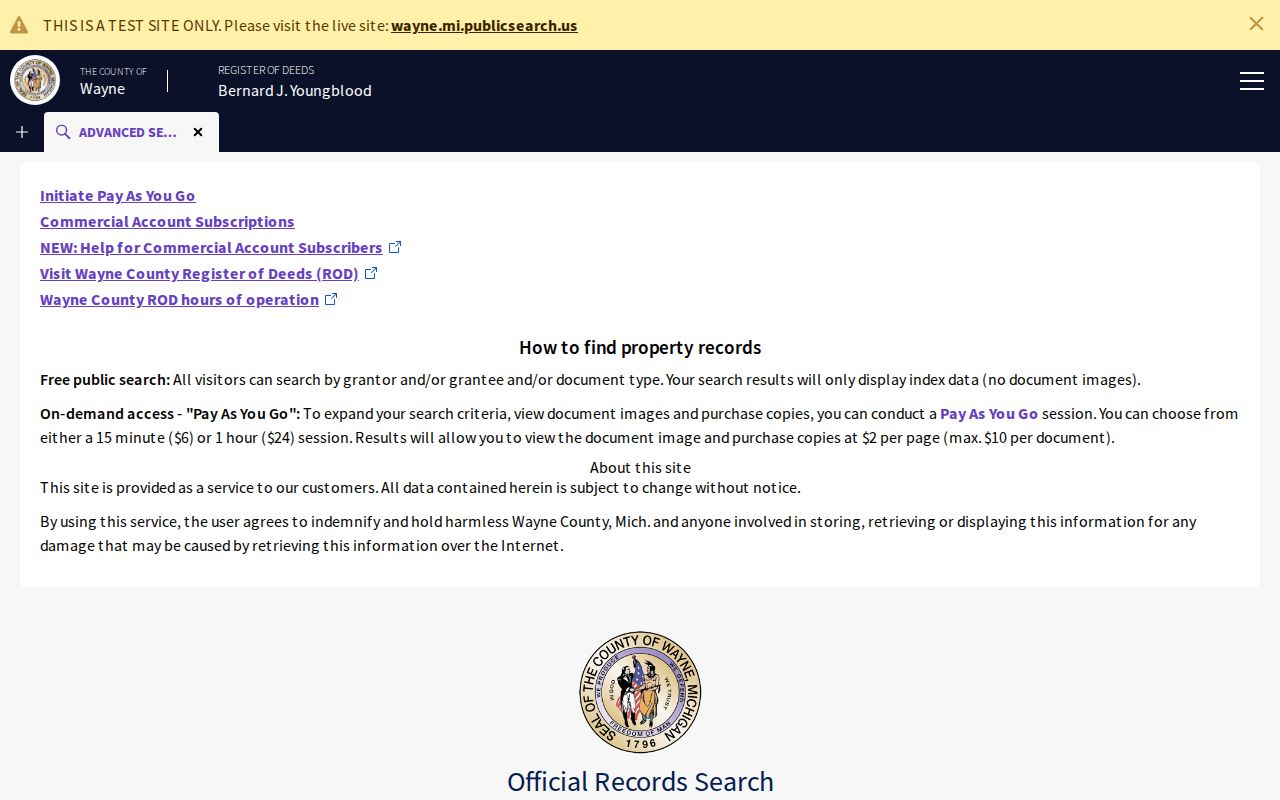
For an address search by mail, Wayne lists $15 per address, with copies at $2 per page and certification at $10. The official service material also identifies $6 for a 15-minute on-demand session, plus applicable fees. Verify the current counter and appointment procedure before traveling to 400 Monroe in Detroit.
Lincoln Park Past Residents Address Records
Street wording can fail before the parcel does. The research found no citywide Lincoln Park renumbering ledger. City code says street names accepted on January 1, 1956 remain unless changed by council resolution, but that continuity rule does not prove that an earlier informal name never existed. When a number does not match a directory or deed, compare the subdivision, lot, block, legal description, parcel ID, and nearby streets.
Lincoln Park Planning and Engineering maintains records related to plats, site plans, rezoning, variances, and lot splits or combinations. Those materials can translate a street address into the land description used by deeds. Wayne GIS can place the parcel on the map, but Wayne notes that local communities prepare current assessment and tax rolls. Confirm current parcel facts in Lincoln Park BS&A.
Note: A same-number match is only a starting point when subdivision, parcel, or street-name evidence points to a different historical parcel.
Lincoln Park Past Residents in Directories
Once a deed identifies the property era, historical directories provide the household layer. The local combined Lincoln Park, Allen Park, and Melvindale volume covers 1941-1988 with missing years. The documented Lincoln Park run begins in 1929-1933, and named volumes include 1929, 1941, 1944, 1947, 1950, 1953, 1954, 1956-1958, and 1960. Bresser criss-cross books are especially helpful when an address is known but the household name is not.
Polk street pages arrange residents and businesses by house number and may mark owner or renter status. Bresser can list household heads, phone numbers, owner or renter notation, first-listed years, and relocation notes. These are dated publisher records, not a complete count of every person at an address. The full holdings and entry-reading details are collected on the Lincoln Park city directories page.
A directory disappearance can mean a move, death, new construction, vacancy, an unlisted phone, a missing volume, or a publisher’s indexing choice. Test that change against the deed sequence before placing it on the address timeline.
Lincoln Park Past Residents Census Timing
Federal census images are released after 72 years. The 1950 images are public, and 1960 images are scheduled to become public in 2032. Census material supplies the relationship, age, birthplace, and household context that a city directory usually does not. It should be paired with, not substituted for, the directory sequence and parcel trail.
- Choose the closest directory year to a released census year.
- Copy the address, household-head spelling, spouse notation, and nearby street context from the directory.
- Find the census household using that address or geography and compare names, ages, and relationships.
- Return to the next available directory to see whether the household remained, moved, or changed form.
- Use the deed chain, obituary, or probate record when a household change needs a dated explanation.
Lincoln Park began as part of Ecorse Township, became a village in 1921, and became a city in 1925. Early material may therefore use Ecorse Township or subdivision descriptions rather than the modern municipal name. That history can explain a failed city-name search without proving a move.
Lincoln Park Past Residents House History
No official Lincoln Park house-history guide or paid research service was located. The documented fallback is the Library of Michigan family-history service, which points researchers to plat maps, cemetery transcripts, newspapers, and county guides. Lincoln Park Historical Society archives and the Lost Lincoln Park project are additional local routes for photographs, printed material, changed landmarks, and address clues.
The Library of Michigan family-history page is the source for the statewide fallback used when a Lincoln Park address-history search reaches an undocumented house-history gap.
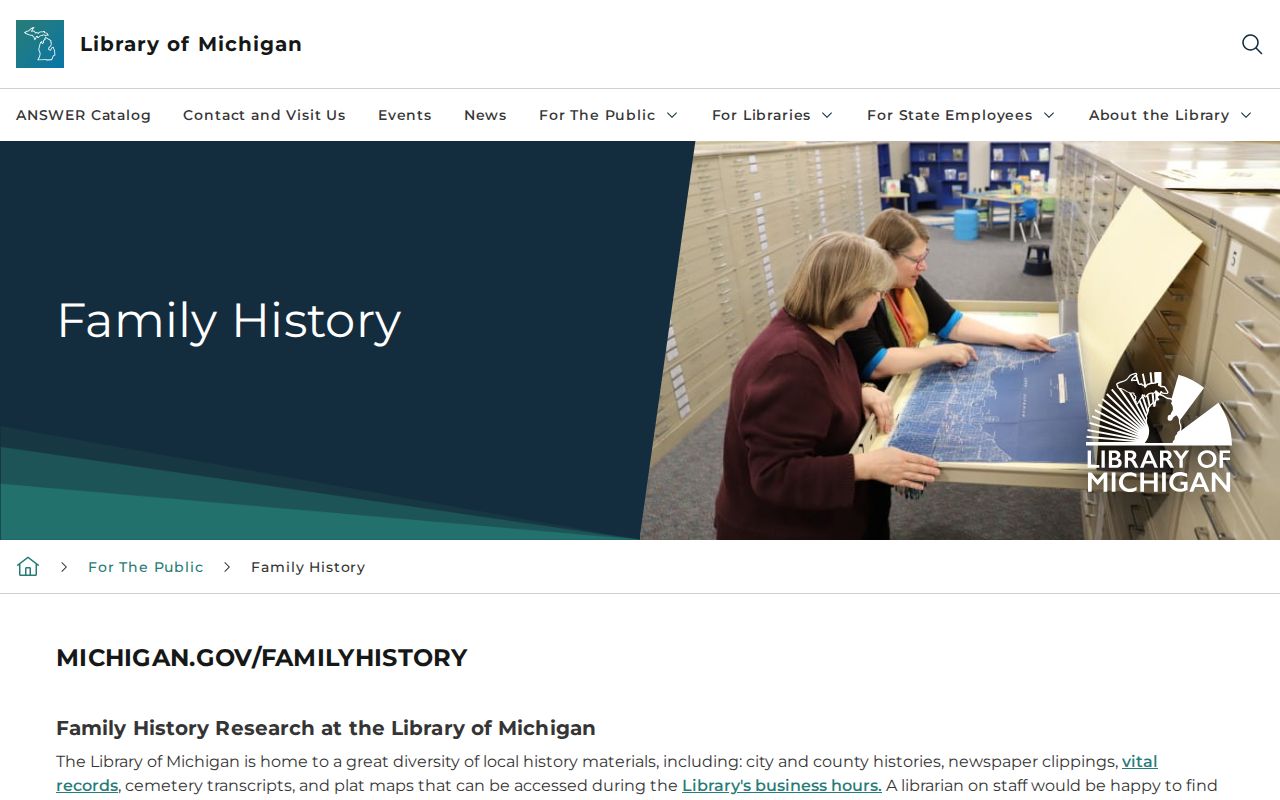
A focused request is more useful than a broad name request. Give the library or museum an address, subdivision, block and lot, former street name, rough build date, and known owner names. The Historical Society has no public name index, so ask what archival material can be consulted rather than expecting a searchable roster.
Lincoln Park Past Residents Sanborn Limits
The Library of Michigan Sanborn microform guide documents a Michigan checklist spanning 1884-1961, with a separate microfilm set that includes previously unpublished maps from roughly 1940-1989. Sanborn maps can show a building footprint, use, construction material, and street or lot context. They do not name the people who lived there.
The state Sanborn guide is a fallback source for Lincoln Park address-history research, not proof that a Lincoln Park edition exists for a chosen year.
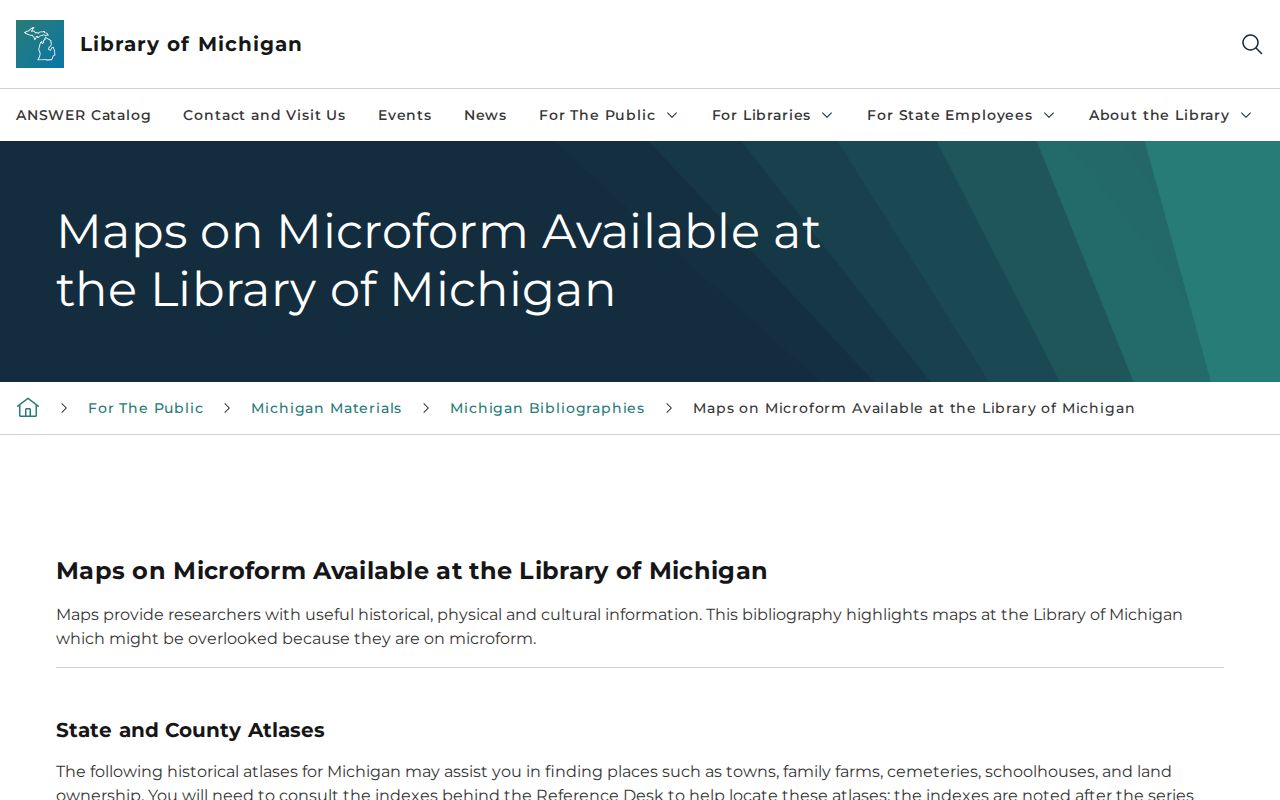
No Lincoln Park-specific Sanborn title or edition dates were verified in the official search. Do not substitute Detroit sheets unless the actual sheet reaches the target suburb. Use a confirmed map as structure evidence alongside deeds, plats, and local building records.
Lincoln Park Previous Residents Endpoints
Obituaries and probate can close a past-residents trail. If a directory’s final entry includes a widow notation or the address changes abruptly, search Michigan death material, local newspapers, and then Wayne Probate by decedent name. Probate records may identify heirs, fiduciaries, property, and a later correspondence address. They do not prove that every heir lived at the Lincoln Park address.
Building permits and code records can also date an alteration, inspection, certificate, vacancy, or enforcement event at an address. The city’s Building Department and BS&A service modes are address keyed, but the historical starting year and full field availability were not located. Treat an event as a dated property clue, not a complete household record.